
Loading...


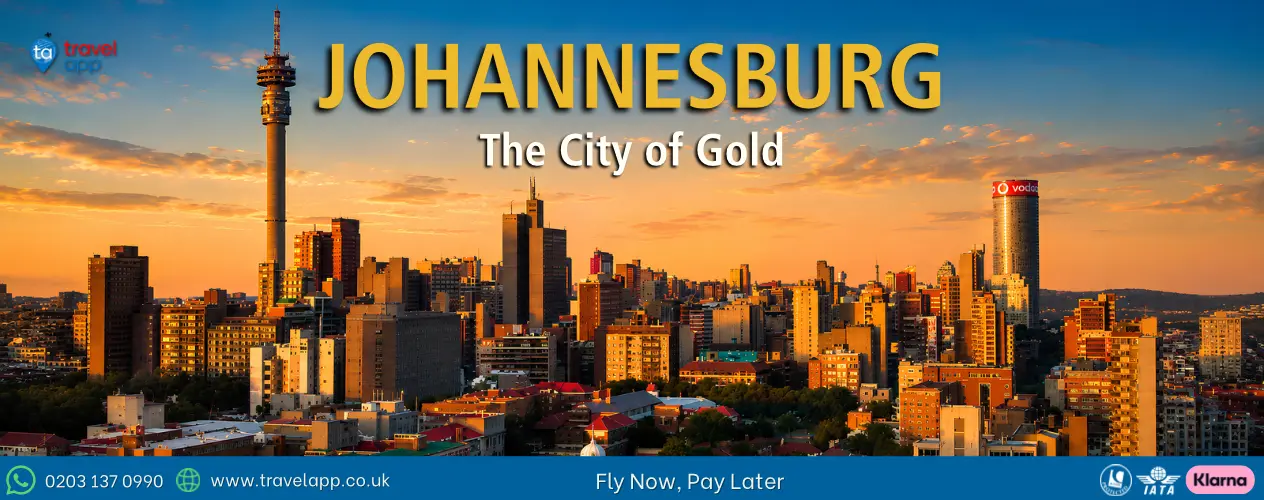
Johannesburg began as a gold mining camp in 1886. Today, it is South Africa's largest city and its economic engine, still known by the name locals gave it more than a century ago: the City of Gold. For UK travellers planning a trip to South Africa, Johannesburg often works as the gateway: the first stop before a safari or a deeper look at the country's history.
This guide covers where that gold rush history came from, the attractions that tell the story best, and the practical details you need: when to go, how to get there, where to stay, and how to stay safe. At TravelApp, we book low flights to Johannesburg and South Africa holidays every day, so we've built this guide around what UK travellers actually ask us.
In 1886, George Harrison discovered gold on a farm named Langlaagte. This farm is located on the Witwatersrand ridge in today's Gauteng province. Word spread fast. Within months, thousands of miners had set up camp, and by October that year, the settlement had a name: Johannesburg.
The city grew at a startling rate. In just ten years, its population grew past 100,000. This was much quicker than Cape Town's growth over two centuries. Today, the wider Johannesburg metro area is home to around 15 million people.
Historians estimate the Witwatersrand basin has produced roughly 30-40% of all the gold ever mined on Earth. That's why it’s called the City of Gold. Johannesburg now thrives on finance and services. It houses the Johannesburg Stock Exchange, the largest in Africa.
Gold Reef City sits on top of a former working gold mine. Alongside the rides, you can tour an actual mine shaft and see how 19th-century miners worked a good half-day stop, especially with kids.
A few kilometers away, the Apartheid Museum explores South Africa's tough recent history. It traces the system from its beginning to Nelson Mandela's release and the first democratic elections in 1994. It's open Tuesday to Sunday, 9am to 5pm, and most visitors need around two hours. It's not a light visit, but it's one of the country's most important museums.
Soweto is South Africa's biggest township. It was key in the fight against apartheid. Vilakazi Street is unique. It’s the only street in the world where two Nobel Peace Prize winners lived: Nelson Mandela and Desmond Tutu. Guided tours mix history with food, music, and conversations with local residents.
Johannesburg sits high on the Highveld plateau, so its climate differs from the coast. Winter (May to September) is dry and sunny, with warm days and cold nights. This is also the best season for safari trips nearby, since thinner bush makes animals easier to spot. Summer runs from November to March. It’s warm and wet, with brief afternoon thunderstorms almost every day. For most UK travellers, April, May, September, and October are ideal. These months have mild temperatures, less rain, and smaller crowds.
Direct flights from London to Johannesburg take around 11 hours and land at O.R. Tambo International Airport, South Africa's busiest. There's not much jet lag. Johannesburg is two hours ahead of the UK in Greenwich Mean Time. During British Summer Time, it's just one hour ahead. TravelApp compares flights to Johannesburg from airports across the UK, so you can book your seat and plan the rest of the trip. This way, you can book your seat and plan your trip.
Sandton is Johannesburg's upmarket business district and the most popular base for visitors, with smart hotels, shopping malls and Nelson Mandela Square. It's generally considered the safest area for tourists. Maboneng is a regenerated arts precinct with street murals, galleries and a busy Sunday market. Melville has a laid-back, bohemian feel, with independent cafes and bars along its main strip. Most first-time visitors base themselves in Sandton and take day trips out to Soweto and Maboneng.
Johannesburg is known for crime, which can deter some travelers. However, most visits go smoothly if you follow basic city safety tips. Keep valuables hidden. Use Uber or Bolt instead of street taxis. Also, avoid unfamiliar areas after dark. The city centre and Soweto are best explored on a guided tour rather than alone. Arrange your airport transfer and first night's accommodation before you land. With a bit of planning, you can navigate Johannesburg more safely.
Johannesburg makes a strong start or end point for a wider South African trip. Pair a few days in the city with Cape Town, or head out to a safari in Kruger or Pilanesberg. TravelApp searches South Africa holidays from airports across the UK, with ATOL-protected holiday packages if you'd rather book flights and hotels together. Browse more destination guides on the TravelApp blog before you go.
Quick answers to common questions. Reach out if you need more help.
Johannesburg got its nickname in 1886 when gold was found on the Witwatersrand ridge. The reef was the richest goldfield in the world. Gold transformed the city from a mining camp into South Africa's economic capital.
In 1886, prospector George Harrison found the first gold reef worth mining on the Langlaagte farm. That find on the Witwatersrand ridge sparked a rush. Johannesburg was founded within months.
Not within the city itself old shafts closed decades ago. South Africa still mines gold further out on the Witwatersrand at mines like Mponeng, one of the world's deepest, and abandoned shafts under the city still draw illegal miners known as zama zamas.
No. South Africa has three capitals: Pretoria (administrative), Cape Town (legislative) and Bloemfontein (judicial). Johannesburg isn't one of them, though it's the country's largest and richest city.
April, May, September and October offer mild weather, low rainfall and fewer crowds. Winter (May to September) is great for safari trips. The thinner bush makes it easier to spot wildlife.
Direct flights from London take around 11 hours and land at O.R. Tambo International Airport. Johannesburg runs on UK time for most of the year, so there is little to no jet lag.
Most visits go smoothly if you follow basic city safety tips. Use registered rideshare apps. Keep valuables hidden. Join guided tours in Soweto and the city center instead of going alone.
Gold Reef City, the Apartheid Museum, and Vilakazi Street in Soweto are key highlights. They showcase the city's mining past and its fight against apartheid.
No. British passport holders can visit South Africa visa-free for stays of up to 90 days, according to South African Tourism.




