
Loading...


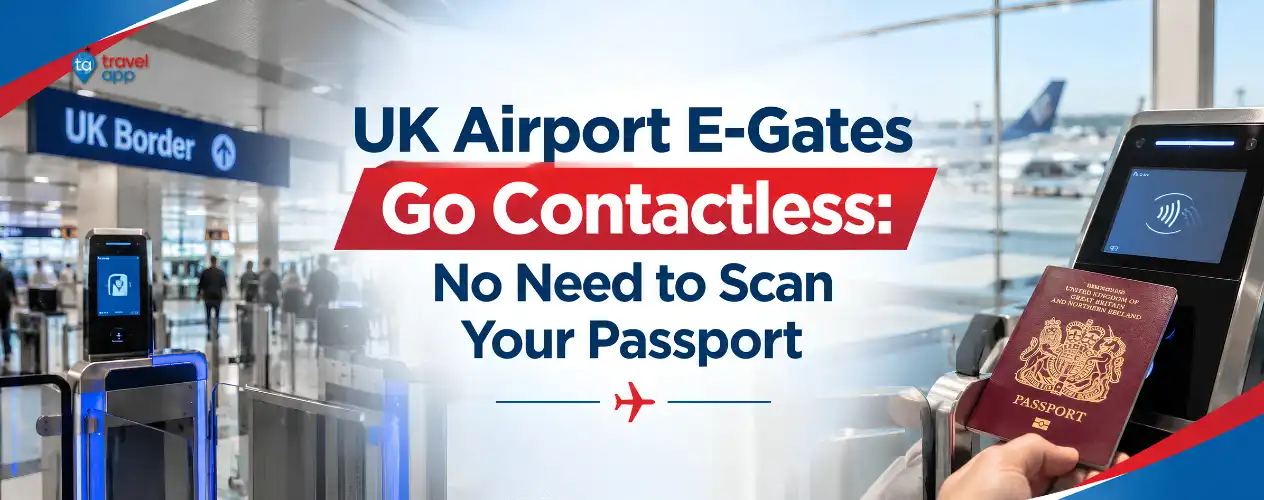
Passengers arriving in the UK are about to see a small but noticeable change at passport control. Border Force has started rolling out contactless e-gates that use facial recognition, so eligible passengers will no longer need to place their passport on the reader once the new system is available.
The first contactless gates went live at East Midlands Airport on 6 October 2026, initially for British citizens. According to the Home Office announcement, the technology will reach all UK e-gates by early 2027, and testing shows it can be up to 25% faster than the existing passport-reading process.
A camera takes a photo as you approach the gate and checks it against verified immigration, travel and passport information. If the check is successful, the gate opens automatically, with no need to take out your passport and place it on the reader.
That doesn't mean you can travel without your passport. According to Border Force's guidance on contactless e-gates, you should keep your passport with you, because you may be asked to show it if the facial recognition check doesn't work or further checks are needed. Border Force officers will continue to monitor the gates.
The technology is being added through software updates to existing e-gates, so airports don't need to replace the gates themselves.
East Midlands Airport is the first UK airport to introduce the contactless system. The initial rollout is for British citizens, and it will expand to other nationalities already eligible to use UK e-gates as the programme continues.
The airports included in the rollout are:
England: Birmingham, Bristol, East Midlands, Gatwick, Heathrow, London City, Luton, Manchester, Newcastle and Stansted
Scotland: Edinburgh and Glasgow
Wales: Cardiff
Until an airport receives the new system, its existing e-gates will keep working as they do now.
The move follows another recent change for families. Since 8 July 2026, children aged 8 and 9 can use e-gates if they are at least 120cm tall and travelling with an adult.
For eligible travellers, the biggest difference is at the border. Instead of stopping to scan your passport, you approach the e-gate, complete the facial recognition check and walk through if everything is in order.
A process up to 25% faster could make a real difference at busy airports, especially during peak holiday periods when large numbers of passengers arrive at the same time.
There is one important point to remember: contactless does not mean passport-free. Keep your passport to hand after landing, because Border Force can still ask for it or carry out extra checks. The Home Office also advises dual nationals to travel on a valid British passport, or to hold a Certificate of Entitlement, to avoid delays.
The change doesn't remove any existing immigration requirements. Visitors must still have the correct visa or Electronic Travel Authorisation (ETA) where required before travelling to the UK.
For passengers returning from holidays, the change should eventually mean less time at the border and a smoother arrival. The rollout is still in its early stages, but the Home Office expects the system to be in place across the UK by early 2027.
Planning your next trip from the UK? Compare flights from major UK airports with TravelApp or explore TravelApp holiday packages.
For the latest news, information, and travel hacks, read Travelapp Blogs.
Related TravelApp news:




